Light Emitting Diode
From DT Online

Description
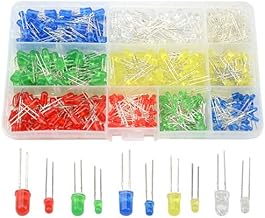
Light Emitting Diodes (LED) come in different colours, shapes, sizes and brightness. The more common colours being red, green and yellow.
They are also available in bi-colour and tri-colour versions. Round ones come in 3, 5 and 8mm sizes. There are also rectangular, square and bar types.
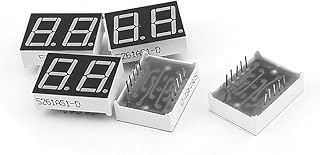
Flashing types are available and seven segment displays are made of a number of LEDs in a particular pattern.
Features and Applications
LEDs are easily damaged by excess current therefore it is normal to connect the LED to the supply via a series current limiting resistor. The value of this resistor is not critical but is usually within the range 100 - 330R.
Polarity must be observed when connecting LEDs (it should be noted that LEDs are damaged by reverse biased voltages larger than about 6 volts).
The Anode is connected to the positive supply via the limiting resistor. The Cathode is connected to the negative supply.